At the end of Part 2 I made a promise and then did not keep it for seven parts.
Next in the Love series: Part 3 — The Jasmine Hour. On Mullai. On Vaali, who lived in that landscape more than any other Tamil lyricist. The jasmine blooms at dusk, the lover hasn't come home yet, and Vaali knew exactly what that hour tastes like.
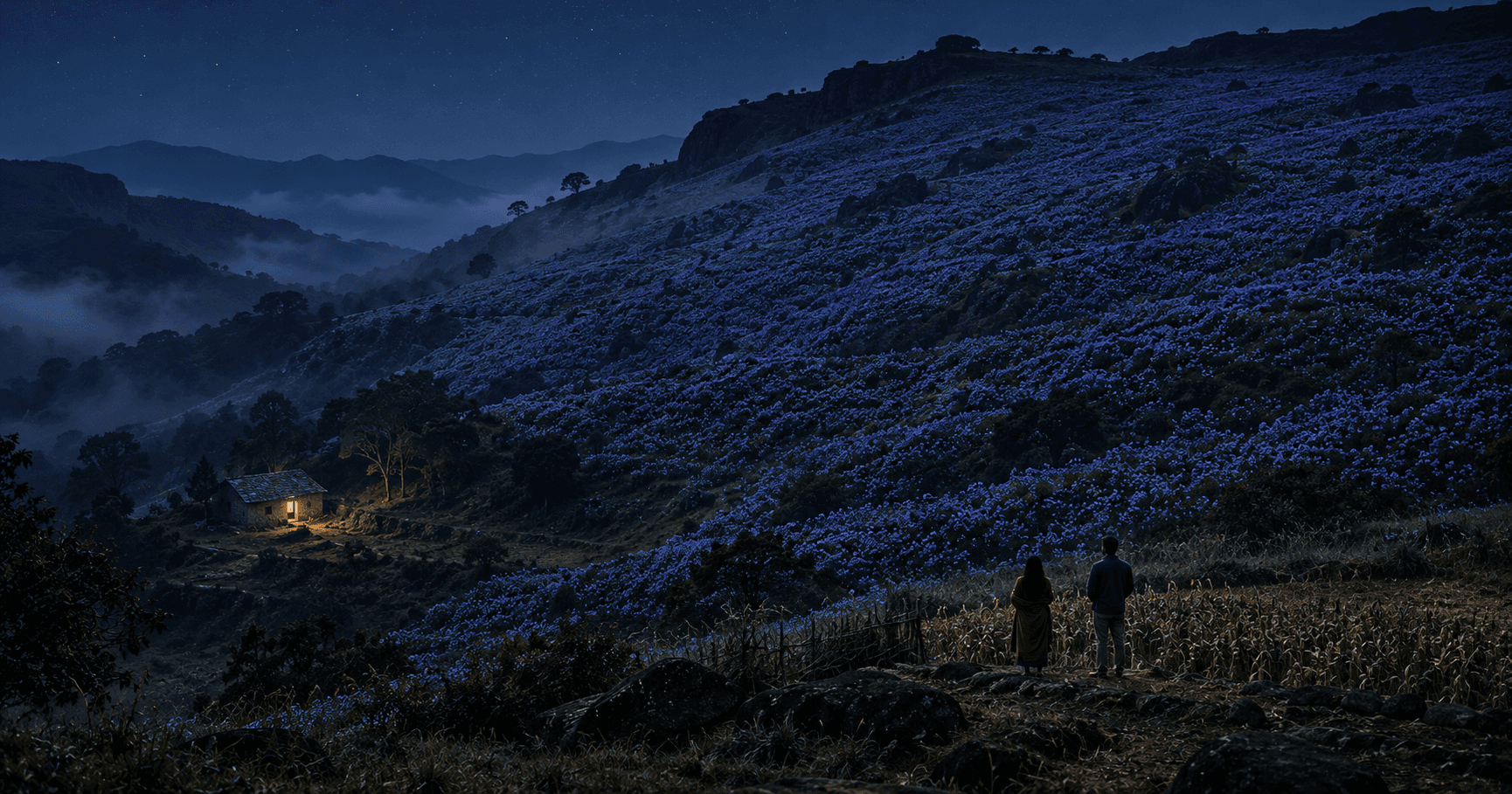
Then the series went somewhere else. Cinema, the Kural, Rumi, a film about a woman who cannot speak, a mountain at midnight. Good essays, all of them, and none of them this one.
The honest reason for the delay is that Mullai is the hardest of the five to write about, and it is hard for a reason that is also the whole point of it.
The Landscape Where Nothing Happens
The Sangam poets divided love into five landscapes, and four of them contain an event.
Kurinji has the union in the mountains. Marutham has the quarrel. Palai has the leaving. Neithal has the one who waits at the shore while the sea makes a visible argument about distance. Each gives a poet something to describe: a meeting, a fight, a departure, a horizon.
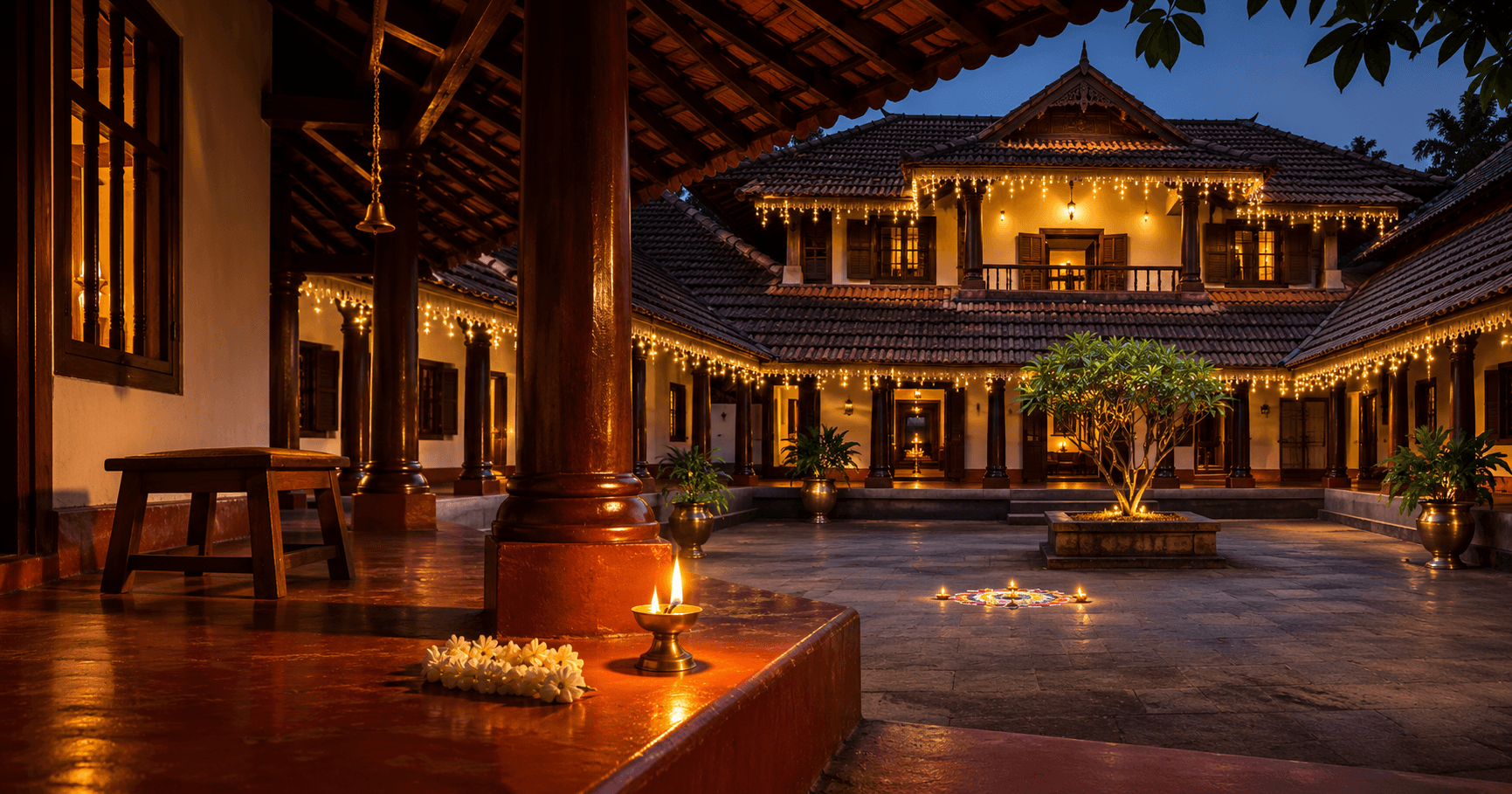
Mullai gives you a forest at evening, cows coming back along a track, jasmine opening as the light goes, and a house where someone is doing nothing more dramatic than continuing.
| Landscape | Hour | Flower | What happens | |
|---|---|---|---|---|
| Kurinji | Mountains | Midnight | Kurinji | They meet |
| Mullai | Forest, pastoral | Evening | Jasmine | She waits |
| Marutham | Farmland | Before dawn | Queen's crape myrtle | They quarrel |
| Neithal | Seashore | Sunset | Water lily | She pines |
| Palai | Wasteland | Noon | Ivory wood | He goes |
Every other tinai is a verb. Mullai is a tense.
And the convention is specific about whose tense it is. The Mullai speaker is almost always the woman at home during the season he said he would return in. Palai owns abandonment, and the grief there is a different grief. Neithal hands her a shoreline and the whole sea for a metaphor. Mullai gives her an ordinary house on an ordinary evening, where she holds the position while the rains arrive as promised and he does not.
Four of the five landscapes ask what love does. Mullai asks what love is like when it is doing nothing at all.
That is why the essay was hard. A piece about waiting has the same problem as waiting.
Vaidehi Waited
There is a Tamil film from 1984 called Vaidehi Kathirunthal. The title is a complete sentence and it is the tinai: Vaidehi waited.
The name is doing more work than the plot needs. Vaidehi is Sita — princess of Videha, Janaka's daughter — and naming a village woman Vaidehi puts the oldest waiting in the subcontinent behind a 1984 romance. Sita in the Ashoka grove is Mullai stretched past endurance: a garden, a season, a woman holding a position, and a man who is coming but not yet.
And the grove is only the first wait. The war ends, Ravana falls, and what she is handed on the other side of it is a doubt. So she asks for a pyre to be built and she walks into it to settle a question about her own body, and the fire gives her back unburnt. That is where the Yuddha Kanda closes — ordeal, vindication, reunion, home.
The Uttara Kanda opens it all again. Back in Ayodhya a rumour starts in the street about where she has been and who she was with, and she is sent away pregnant to a hermitage in the forest. She bears Lava and Kusha there and raises them in the jungle without him. Years pass. He hears his own story sung back to him by two boys before he learns whose they are. And when the question is put to her a second time, in public, she calls on her mother.
Her mother is the earth. Janaka found Sita rather than fathered her — turned her up in a furrow while ploughing a field, which is what her name means, the line a plough leaves in the ground. She is Bhūmi Devi's daughter, lent to a king's house for a while. So the ground opens and takes her back, and of every arrival anyone waits for in that story, hers is the one that comes the moment it is called.
She had already walked through fire to answer that question. It was asked again anyway.
So the second wait was longer than the first, and harder, and it was for something the first had supposedly already bought. He had come back. The love and the regard had yet to.
That is the part the Mullai convention does not prepare you for. The landscape assumes the waiting ends when he arrives at the door. Sometimes the person you love is the one who keeps you waiting, and sometimes he is standing right there while you do it. Love does hurt. Tamil has known that for two thousand years and kept writing the hour anyway.
Tamil also argued with that ending for centuries, and Kamban's answer was to stop before it. His Ramavataram runs six kandams and ends with the war. The banishment, the forest years, the twins, the second ordeal, the earth opening — none of it is his. The Tamil Uttara Kandam arrived later and from another poet's hand, Ottakoothar's, as a seventh kandam added to a work that had finished without it. Valmiki scholarship reaches the same place by a different road: the first and last books are the late ones, missing from the oldest manuscripts, and the Sanskrit and the rhetoric in them do not match the five books between.
Whatever else that is, it is a judgement about where a story is allowed to end — and which of her two waits a poet is willing to make his readers sit through.
Vaali wrote the songs that carry the title's meaning, and he does not leave the reference for the audience to find. Somewhere in them he simply says it out loud:
ஸ்ரீ ராமனோட பூ மாலை போட வைதேஹி உள்ளம் வாடுது
To lay a flower garland on Sri Raman — Vaidehi's heart wilts for it.
வாடுது. Wilting. The verb you use for a flower, applied to a heart, in a film named for a woman who waits. The garland is in her hands and the neck it was strung for is elsewhere.
The Lamp Is Already Lit
The film's best-known song is Rasathi Unna Kaanatha Nenju, in P. Jayachandran's voice. Its refrain is four lines, and all four of them are the landscape.
ராசாத்தி உன்ன காணாத நெஞ்சு காத்தாடி போலாடுது பொழுதாகிப் போச்சு விளக்கேத்தியாச்சு பொன்மானே ஒன்னத் தேடுது
Rasathi — this heart that has not seen you sways like a kite on a string. The day is gone, the lamp is lit, and it is still out looking for you, my golden deer.
Three images, and each one does something the convention has been doing since Tolkappiyam.
காத்தாடி. A kite. Tethered at one end and thrown around at the other, in constant motion and going absolutely nowhere. Every other tinai would have given the heart somewhere to travel. This one puts it on a string.
விளக்கேத்தியாச்சு. The lamp has been lit — said in the perfect tense, as something already done. That is the Mullai hour arriving as a household fact rather than a mood. Dusk in Tamil houses has a chore attached to it, and the song marks the time the way a woman in that house would: the lamp is up, so it is that hour again.
பொன்மானே. Golden deer. He is calling her the golden deer, in a film called Vaidehi Kathirunthal, and the golden deer in that story is the illusion sent to draw Rama away from the hut — the reason Sita is alone. The thing being waited for is named after the thing that caused the waiting. I cannot prove Vaali meant the full weight of it. He put Vaidehi and the golden deer in the same song, and he was not a careless man about names.
The Breath I Take
Deep in the first charanam, the song stops describing and makes a claim.
முத்தம் தர நித்தம் வரும் நட்சத்திரம் யாரோடு இங்கு எனக்கென்ன பேச்சு நீதானே கண்ணே நான் வாங்கும் மூச்சு வாழ்ந்தாக வேண்டும் வாவா கண்ணே
Stars come down every night to be kissed — what talk have I with any of them? You, kanne — you are the only breath I need. I have to go on living. So come. Come, kanne.
நான் வாங்கும் மூச்சு. The breath I take. He had air, life and the heart available to him, and he picked the specific act of taking a breath — something a body performs about twenty thousand times between one evening and the next. He has found the one unit that measures waiting correctly. It is involuntary, it is unremarkable, nobody watches you do it, and it does not stop.
Then வாழ்ந்தாக வேண்டும். The grammar is compulsion, not preference. Living has to happen. Then the imperative twice, வாவா — come, come — addressed to an empty room.
The whole of Mullai is in the order of those two clauses. The obligation comes first and the request comes second, which means the living is going to proceed either way. That is the difference between this landscape and grief.
Both Voices
Vaali wrote the song twice.
ராசாவே உன்ன காணாத நெஞ்சு காத்தாடி போலாடுது
Rasave — this heart that has not seen you sways like a kite on a string.
P. Susheela sings that one. One word changes — ராசாத்தி becomes ராசாவே, my queen becomes my king — and the hour transfers intact. Same kite, same lamp, same string.
That is a real argument about the tinai, made in a film soundtrack. The Sangam convention assigns the waiting to the woman at home, and two thousand years of commentary has treated that as a fact about women. Vaali hands the identical refrain to a man and nothing in it strains. The hour belongs to whoever was left behind.
The Catalogue of Evening
Tamil cinema called him வாலிப கவிஞர் — Vaaliba Kavignar, the Youth Poet. He carried the name for five decades and more than fifteen thousand songs, and it was meant as a compliment about energy: the lyricist who could write for whoever was twenty that year.
Lay his love songs side by side and the energy is somewhere else entirely.
| Song | Film | Year | What it is |
|---|---|---|---|
| Nilaave Vaa | Mouna Ragam | 1986 | Moon, come |
| Kanmani Nee Vara | Thendrale Ennai Thodu | 1985 | Beloved, for you to come |
| Anbe Vaa Arugile | Kili Pechu Ketkava | 1993 | Love, come near |
| Maalaiyil Yaaro | Chatriyan | 1990 | Someone, in the evening |
| Thendral Vandhu Theendum Pothu | Avatharam | 1995 | When the breeze comes and touches |
| Rasathi Unna Kaanatha Nenju | Vaidehi Kathirunthal | 1984 | The heart that has not seen you |
Read that column of titles as a single sentence and you have the whole landscape. Come. Come. Come near. Someone, in the evening. An imperative addressed to someone who is not in the room, which is the only grammar waiting has.
A lyricist who writes one song like that is writing a song. A lyricist with a catalogue of them has found a place to live.
And in the middle of the same song, describing her, he reaches for this:
தத்தித் தவழும் தங்கச் சிமிழே பொங்கிப் பெருகும் சங்கத் தமிழே
Little golden casket, toddling and crawling — Sangam Tamil, brimming over.
சங்கத் தமிழே. He calls her Sangam Tamil. In the one song of his that sits most exactly inside a Sangam convention, he names the convention, in a village love song, as a term of endearment. Whether that was scholarship or instinct, the man knew which library he was standing in.
Three Men at the Forest's Edge
Part 1 sketched Mullai in English and pop, and the sketches hold up well enough to finish.
Lionel Richie picks up a telephone and admits the entire situation in one line: I've been alone with you inside my mind. He has loved this person a thousand times in imagination and not once out loud. The song is famous for being a little ridiculous, and it is exactly right about one thing — the waiting in Mullai is often for permission to begin rather than for anyone's return.
Elvis takes a French melody from 1784 and sings wise men say only fools rush in, concedes that patience is the better argument, and then does not take it. Mullai at its most human: patience that already knows it has lost.
Clapton stands in a doorway watching someone brush her hair and finds it extraordinary. The evening hour where love is being lived instead of tested.
Three men, one landscape, all three facing the same direction — toward a person who has not arrived.
What the Sangam convention adds, and what the pop songs do not have, is the other chair. Tamil gives the waiting woman a voice, a season, a confidante, and a set of omens to read. She holds the poem herself rather than a place in someone else's.
What This Essay Is Careful Not to Be
Two pieces in this series have already taken the neighbouring ground.
She Loved You in Whole Sentences is about love expressed as action — the coffee always ready, the plate always full, sapttiyaa? carrying everything the sentence does not say. That is love doing. Don't Give Me a Voice is about love that communicates without language at all. That is love signalling.
Mullai is a third thing. Nothing is being communicated in that house at dusk, to anyone. Nobody is watching her be faithful; there is no audience for it and no message in it. She is simply still there in the evening, and will be tomorrow.
The tradition's word for what she has sits closer to duration than to patience. Patience sounds like a virtue being performed, and there is nobody here to perform it for. Duration is love measured in how long it goes on being itself without any of the things that usually hold love up. No contact. No confirmation. No event. Twenty thousand breaths between one lamp and the next.
Every other landscape in this series gives love something to push against — a mountain, a quarrel, a shoreline, a desert. Mullai takes all of it away and asks whether the thing is still there. Most of any real love is spent in that landscape, and almost none of the songs are.
The Hour Itself
The flower matters. Jasmine opens at dusk and is strongest after dark, which is to say it does its work when nobody has come to see it and it cannot be sure anyone will.
Tamil households still string it in the evening. It goes into hair at the hour the poems assign to waiting, in houses where nobody is thinking about Sangam convention, and the association has outlasted every literature that recorded it.
That is the quiet claim this essay wants to make. Kurinji's flower blooms once in twelve years and has become a metaphor precisely because it is rare. Jasmine blooms every single evening, cheaply, everywhere, and nobody writes essays about it.
Mullai is the common one. The landscape most people actually live in, named two thousand years ago by poets who understood that the hardest thing love does is continue on an evening when nothing is happening and nobody is coming.
Vaali spent sixty years writing vaa — come — to people who were not in the room. Sixty years of an imperative that only works while the other chair is empty.
The hour was the subject all along, and it could carry a whole song with nobody arriving in it.
The lamp is lit. The kite is still on its string. And the heart that has not seen you is still, at this hour, out looking.
This essay lives in the Love series. Red Earth and Rain laid out the five landscapes; The Shore of Longing took Neithal and promised this one seven parts ago; The Mountain at Midnight is Kurinji, the hour that arrives once in twelve years. This one is the hour that arrives every evening. The tinai framework is from Tolkappiyam and the Sangam anthologies; song, film and lyricist credits are from the soundtrack listings for each film.
பொழுதாகிப் போச்சு விளக்கேத்தியாச்சு — Vaali, Rasathi Unna Kaanatha Nenju, 1984